
Remember when being "creative" just meant having a nice hobby on the side? Those days are gone.
Today, creativity isn't just something you do after work or on weekends. It's become an actual economy. Filmmakers, digital artists, writers, content creators—they're all turning their ideas into real income and their passion into sustainable careers.
And it's massive. The creative economy already generates billions in revenue, and some estimates suggest they could represent up to 10% of global GDP by 2030. But here's what most people overlook: this shift isn't just about what people are creating. It's about how they're creating, collaborating, and building entirely new ways to thrive.
If you've been wondering where all this is headed—or how you can position yourself to actually grow with this movement—you're in the right place. Let's break down what's shaping the creative economy right now.
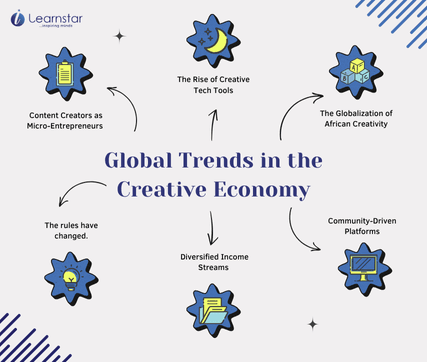
Trend 1: Content Creators as Micro-Entrepreneurs
Upload a video. Post your design. Repeat.
That used to be the whole game. Not anymore.
Today's creatives aren't just making content—they're building businesses. They've got product lines, brand partnerships, and entire ecosystems around their work. Content creation has evolved into business creation.
Platforms like YouTube, TikTok, Instagram, and Patreon have made this possible. Creators now earn through sponsorships, subscriptions, merch drops, and direct community support. Some are pulling in six figures doing what they love.
Here's the mental shift you need to make:
Stop thinking like a creator. Start thinking like a business owner.
That means:
- Your work needs to serve someone, solve a problem, or tell a story they care about
- You should have something to sell—a course, a design pack, physical products, or even just access to your community
- Track what matters: engagement and value creation, not just follower counts
When you start treating your creativity like a business, you stop being dependent on platform algorithms and start owning your future. That's why this matters so much.
Trend 2: The Rise of Creative Tech Tools
Technology isn't just helping creatives anymore. It's their creative partner.
AI, augmented reality, virtual reality—these aren't buzzwords. They're tools that are fundamentally changing how ideas get made, marketed, and monetized.
Think about it:
- AI tools can now generate images from text prompts, compose music, and edit videos—all at a fraction of what it used to cost
- AR and VR are letting creatives build immersive experiences: virtual art galleries, interactive fashion shows, 3D storytelling
- No-code platforms mean you can launch products, build websites, and create online courses without knowing how to code
What does this mean for you?
Learn the tools, not just the craft. Your "tech stack" matters now. Experiment with new formats early—being an early adopter can give you a serious advantage. And when you combine your creative vision with technical fluency, you unlock entirely new income streams.
The tools are here. The question is: how creatively will you use them?
Trend 3: The Globalization of African Creativity
African creatives aren't just participating in the global conversation anymore. They're leading it.
Afrobeats is dominating charts worldwide. Fashion from Lagos and Nairobi is influencing runways in Paris and New York. Nollywood films are streaming on global platforms. The world is paying attention—and paying up.
This opens up real opportunities:
- Your work can reach audiences anywhere on the planet
- You can collaborate with creatives across borders like never before
- Your local stories and cultural perspective? Those are assets now, not limitations
Sure, there are still challenges—monetization can be tough, infrastructure isn't always there, and recognition doesn't always come easy. But those gaps? They're also where the biggest opportunities live.
African creatives are rewriting the narrative right now, and the standards they're setting are raising the bar for everyone.
Trend 4: Community-Driven Platforms
Used to be, all you needed was skill and hustle.
Now? Who you know and who knows you might matter just as much.
Community has become currency in the creative economy. Here's why:
Mentorship and peer support speed everything up. Learning from someone who's already done what you're trying to do is invaluable.
Most opportunities come through connections. Creative gigs rarely come from cold applications. They come from your network.
Communities amplify your visibility. When you're part of a creative community, your work gets seen, shared, and uplifted in ways it wouldn't on its own.
At Learnstar, this is exactly what we focus on—building those connections so creatives can learn, share, and grow together.
If you're creating in isolation, you're leaving strength on the table.
Trend 5: Diversified Income Streams
Relying on one platform or one income source? That's a risky game in 2025.
Today's successful creatives are earning from multiple places: online courses, brand partnerships, NFTs, live events, streaming platforms, teaching, consulting—the list goes on.
Think about it this way:
- Don't put all your eggs in one basket. If one algorithm changes overnight, your income shouldn't collapse
- Treat yourself like a business. What assets do you actually own? What can people pay you for?
- Your voice is valuable. Whether you design, make music, cook, or write—there are people who want to learn what you know
The creative economy rewards those who think strategically about income, treat their work like a business, and stay adaptable.
Why This Actually Matters to You
The rules have changed.
Creativity isn't just art anymore. It's career. It's industry. It's impact.
If you've been wondering how to turn your creative passion into something sustainable—not just a side thing, but a real path—these trends are your roadmap.
They show you where attention is moving, how to position yourself, and what skills and mindset you'll need.
At Learnstar, we build programs around these exact trends. Because we believe you shouldn't just create—you should grow. Whether you're a musician, designer, content creator, chef, or storyteller, understanding these five trends keeps you future-proof.
What to Do Next
Reading about trends is one thing. Acting on them is another.
Here are three things you can do this week:
- Pick one trend to explore. Maybe test out a new AI tool or join a creative community online
- Set one concrete goal. Something like "I'll collaborate with another creative this month" or "I'll launch a mini product by end of quarter"
- Find your people. Join a learning community, connect with a mentor, or reach out to a peer. Growth happens faster when you're not alone
Final Thoughts
The creative economy isn't some future concept. It's happening right now—in the work of writers, designers, musicians, filmmakers, and innovators everywhere.
And the exciting part? It's accelerating. With more accessible tools, thriving digital communities, and unprecedented global reach, creativity has become one of the most powerful currencies we have.
But it's also getting more competitive. Standing out takes more than talent. You need adaptability, strategy, and a commitment to keep learning.
So whether you're just starting out or building your next big thing, remember: the opportunities are there for those who stay curious, stay consistent, and stay connected.
The future belongs to creatives who keep showing up—who keep learning, experimenting, and pushing boundaries.
And that future? It's being written by people exactly like you.
Discussion (0)
Join the discussion — Log in or create an account.